



The phrase crusty white dog has become a surprisingly common term across search engines, social media and meme culture. Some people encounter it through humor, others while researching dog breeds and many stumble upon it while trying to understand why certain white dogs look unkempt or stained. Despite its popularity, the meaning behind the term is often misunderstood.
Is a crusty white dog an actual type of dog? Does a crusty white dog breed really exist or is it just an exaggerated internet phrase? This article explains what the term actually means, why it became popular and how grooming, appearance and online culture created the myths surrounding the so-called white crusty dog breed.
What Does Crusty White Dog Really Mean?
A crusty white dog is not a scientific term, veterinary diagnosis or official classification. It is a descriptive phrase used informally to describe white dogs that appear stained, scruffy or poorly maintained at first glance. The word crusty usually refers to visible buildup rather than actual dirt or disease.
People typically use the term when a dog has tear stains around the eyes, dried saliva near the mouth, tangled fur or discoloration in the coat. Because white fur shows these issues more clearly, even small imperfections stand out. Over time, repeated use online turned the phrase into a recognizable label rather than a literal description.
Is There a Crusty White Dog Breed?
One of the most common questions people ask is whether a crusty white dog breed actually exists. The short answer is no. There is no breed officially known as a crusty white dog and no kennel club recognizes a white crusty dog breed.
This misconception comes from the fact that certain white coated breeds share similar grooming challenges. When these dogs are photographed without regular grooming, they may look alike in appearance, leading people to assume they belong to the same category. In reality, coat color and hair texture are the main factors, not breed identity.
Why White Dogs Get Labeled Crusty More Often
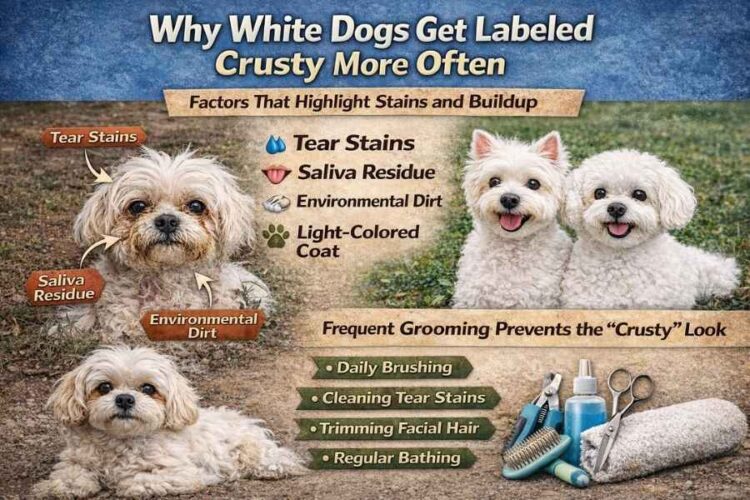
White dogs are far more likely to be called a white crusty dog simply because their fur highlights stains and buildup. Tear stains, moisture, food residue and environmental dirt are all more visible on light colored coats.
Several natural factors contribute to this appearance. Some dogs are genetically prone to tear staining due to eye shape. Others produce more saliva, which can discolor fur around the mouth. Weather conditions, outdoor activity and even water minerals can also affect coat appearance.
None of these factors automatically indicate neglect or poor health, yet they strongly influence perception.
Grooming Habits Matter More Than Breed
The biggest difference between a clean looking white dog and one labeled as a crusty white dog is grooming consistency. Dogs with fine, long or curly white hair require frequent maintenance to prevent matting and staining.
Regular brushing, eye cleaning, professional grooming and proper hygiene can dramatically change how a dog looks. When grooming routines slip, even temporarily, the dog’s appearance can change quickly. This is why the idea of a permanent crusty white dog breed is misleading, appearance is not fixed.
Breeds Commonly Associated With the Term
Although no official white crusty dog breed exists, some breeds are more often associated with the label due to coat type and facial structure. These dogs typically have long or continuously growing hair that shows stains easily.
Breeds commonly linked to the term include Maltese, Shih Tzu, Bichon Frise, West Highland White Terrier and poodle mixes. These dogs are not inherently crusty, but they require more grooming than short-haired or dark-coated breeds. When grooming is inconsistent, the crusty look appears faster.
The Influence of the Crusty White Dog Meme
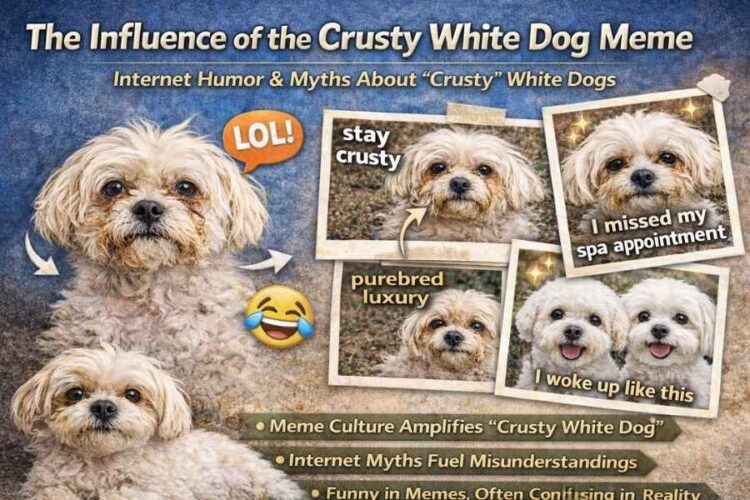
The rise of the crusty white dog meme played a major role in cementing the term in popular culture. These memes usually feature small white dogs with expressive faces paired with humorous or sarcastic captions. The contrast between a fancy breed and a messy appearance makes the joke relatable and memorable.
Memes exaggerate for entertainment, but repetition can blur the line between humor and belief. Over time, people began using the term casually, even outside of meme contexts. While most viewers understand it is a joke, the label can shape how white dogs are perceived.
Read Also: Exploring the Micro Bully: A Compact and Adorable Canine Companion
Common Myths About Crusty White Dogs
One widespread myth is that a crusty white dog is unhealthy. In most cases, this is not true. Many dogs labeled this way are perfectly healthy and active. Another myth is that the owner is neglectful, which ignores how quickly white coats show stains even with proper care.
There is also a false belief that all small white dogs fall into this category. This stereotype exists largely because of internet trends, not reality. Understanding these myths helps separate appearance based assumptions from facts.
Why the Term Continues to Trend Online
The phrase crusty white dog continues to trend because it is simple, visual and emotionally neutral enough to be used humorously. Social media favors short, descriptive phrases that people can instantly recognize and reuse.
As long as memes, short-form videos and viral content exist, catchy labels like this will continue to circulate. The term survives not because it is accurate, but because it is memorable.
Final Thoughts
The term crusty white dog is a product of internet culture, not canine science. There is no real crusty white dog breed and the idea of a white crusty dog breed is based on misunderstanding grooming needs and coat characteristics.
White dogs are more visually sensitive to staining, which makes minor grooming issues appear exaggerated. When combined with meme culture, this creates a label that sticks. Understanding the difference between humor and reality allows dog owners and readers to view the term with context rather than judgment.
FAQs
What breed are crusty white dogs?
Crusty white dogs are not a specific breed. The term commonly refers to white coated breeds like Maltese, Shih Tzu or Bichon Frise that show stains easily without regular grooming.
Why is my white dog crusty?
Your white dog may look crusty due to tear stains, saliva buildup, environmental dirt or matted fur. White coats show discoloration more clearly, even when the dog is healthy.
Are crusty white dogs a meme?
Yes, crusty white dogs are widely used in internet memes. The term became popular through humorous images of expressive white dogs, exaggerating their appearance for entertainment and relatability.
How to treat crusty white dogs?
Treating a crusty white dog involves regular grooming, cleaning tear stains, brushing daily, trimming facial hair, maintaining dental hygiene and providing a balanced diet to reduce staining.
What causes crusty white dogs?
Crusty appearances are caused by tear staining, saliva residue, lack of grooming, environmental exposure, coat type and facial structure. These factors are common in white dogs and not breed specific.
What are some popular crusty white dog names?
Popular crusty white dog names often come from memes or humor, such as Mochi, Biscuit, Snowy, Milo, Pearl, Coco, Teddy or Cloud, reflecting their fluffy and expressive appearance.
What are the characteristics of crusty white dogs?
Crusty white dogs are typically small to medium sized, white coated, expressive and fluffy. They often have long or curly fur that requires frequent grooming to prevent staining and matting.


